
by Oscar Mata
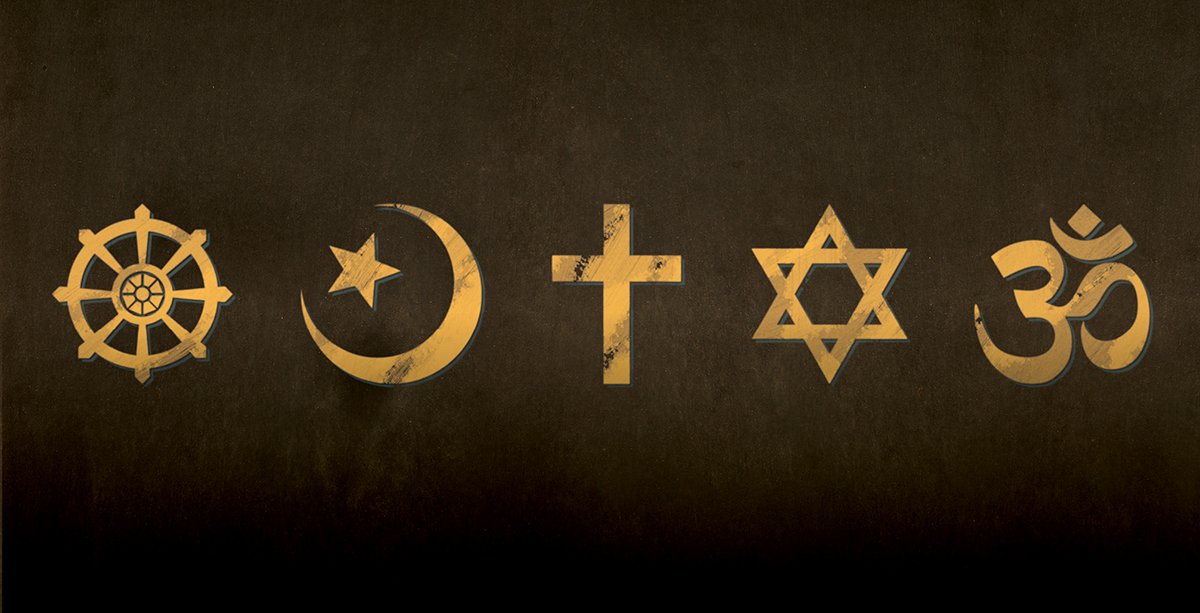
In some so-called Christian circles, it has become common to hear a phrase that sounds kind, conciliatory, and apparently humble: “All religions lead to God.” Many people repeat it, thinking they are promoting peace and respect among others.
However, in light of Scripture, that statement is not simply another opinion. In reality, it contradicts one of the most fundamental pillars of the gospel.
The problem is not that many religions exist in the world. It’s when someone claims that all of them lead to the same God, while also saying they believe in Jesus Christ. The message of the New Testament never presents Jesus as one spiritual option among many but as the only way to the Father.
Jesus himself said, “I am the way, the truth, and the life. No one comes to the Father except through Me” (John 14:6). This declaration leaves no room for a religious pluralism in which every path is equally valid.
In light of the Resurrection, the apostles held exactly the same conviction. Peter publicly proclaimed, “nor is there salvation in any other, for there is no other name under heaven given among men by which we must be saved” (Acts 4:12). Likewise, Paul affirmed that “there is one God and one Mediator between God and men, the Man Christ Jesus” (1 Timothy 2:5).
These statements do not arise from religious intolerance but from biblical monotheism. The first believers did not think they were founding a new religion. They were living the culmination of the faith of Israel — the same faith that proclaimed, “Hear, O Israel: The Lord our God, the Lord is one!” (Deuteronomy 6:4).
Within this framework, claiming that many religions lead to God not only dilutes the gospel but also destroys the coherence of biblical monotheism. The apostolic reasoning is simple: If there is only one true God, then reconciliation with that God cannot come through multiple contradictory religious paths. That is why Paul connects both ideas in 1 Timothy 2:5: “one God and one Mediator. . .” (emphasis mine).
When someone claims that all religions lead to God, they are saying that Christ is not necessary or that His work is not unique. And if Christ ceases to be the center of access to God, the gospel ceases to be the gospel. It becomes something else. That is why the apostle Paul was so emphatic when he warned, “If anyone preaches any other gospel to you than what you have received, let him be accursed” (Galatians 1:9).
It does not matter whether this idea comes from ignorance, stubbornness, or poor teaching. The result is the same: People end up following a different gospel.
Some try to soften the issue by saying, “What really matters is being a good person.” But Christianity never taught that reconciliation with God is obtained simply by being a good person. Paul explained that if the foundation of the gospel collapses, faith becomes empty (1 Corinthians 15:14).
The same principle applies here. If we remove Jesus as the only way to the Father, the gospel loses its heart. Biblical monotheism becomes an empty idea, the cross loses its meaning, and Christianity ends up reduced to just another religious message among many.
At that point, Christianity stops being a proclamation of truth and becomes spiritual confusion.
Saying Christ is the only way is not an act of arrogance or a lack of love for others. Sometimes love requires speaking with clarity, and truth is not always comfortable.
That is why it is worth asking ourselves an honest question: If we truly believe that Jesus is the Lord and Messiah sent by God, can we, at the same time, affirm that any religion leads equally to God? Because if all religions lead to God, then Jesus is not the only way (John 14:6).
And if Jesus is not the only way, then the gospel preached by the apostles is no longer the gospel we are believing (Galatians 1:9).