If stories were Jesus’ favorite teaching tool, why did the apostles stop using them?
by David Cerqueira
The New Testament does something unexpected after the Gospels: It departs from Jesus’ style of teaching. Read the New Testament straight through, and you’ll notice it. Jesus tells stories; His apostles do not.
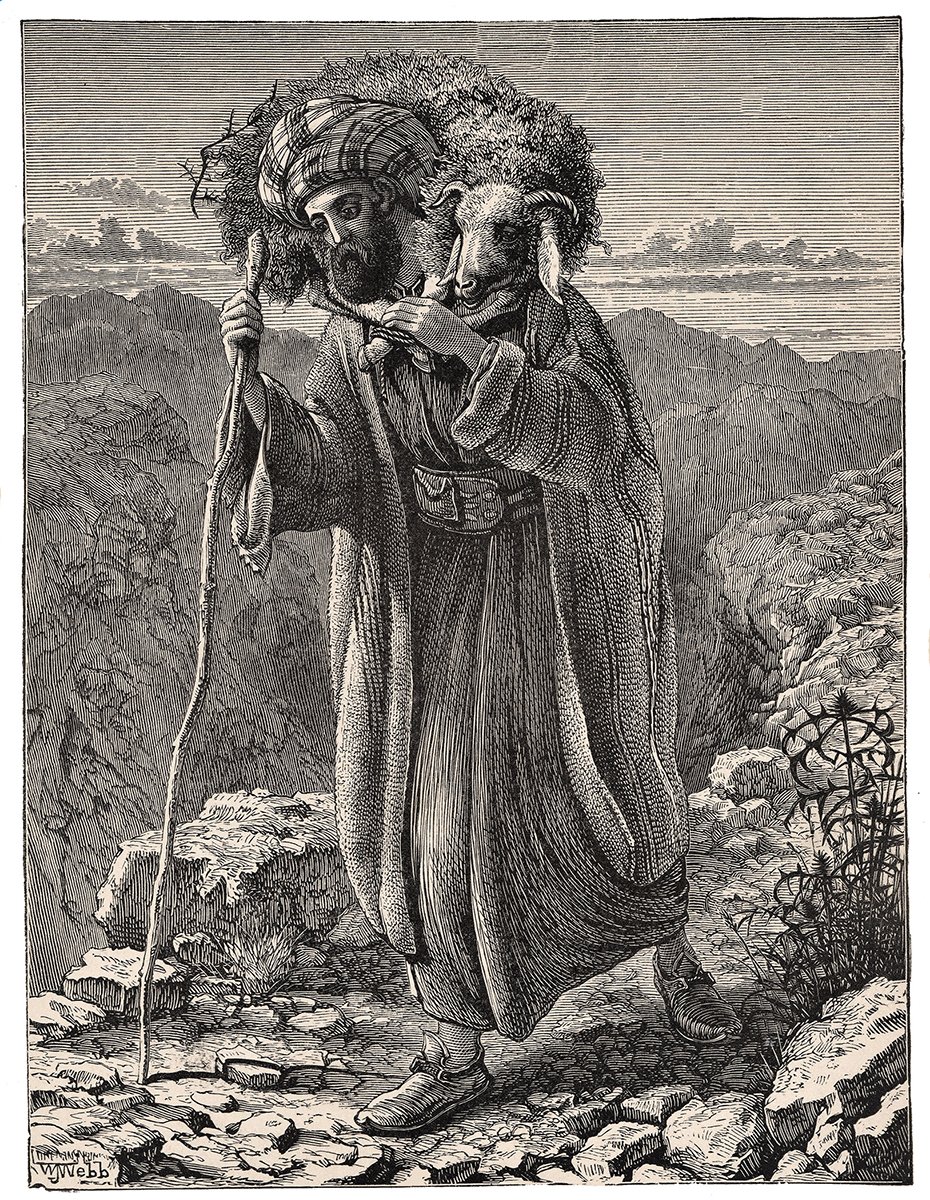
In the Gospels, the air is thick with the scent of mustard seed, the dust of the vineyard, and the bleating of lost sheep. Jesus, the master teacher, rarely speaks without telling a story. He clothes the mysteries of the kingdom in the familiar forms of coins, candles, and wheat. Through this method, the ordinary becomes a doorway to the eternal.
So why do the parables disappear after Jesus?
As we move from the book of Acts into the epistles of Paul, Peter, and John, the sheep and seeds vanish. The language becomes direct, doctrinal, and starkly plain. Did the apostles simply lack their Master’s imagination, or was there a more profound theological reason for the silence of the parables?
Understanding why Jesus used this “story” language, and why the apostles eventually set it aside, reveals a beautiful progression in God’s Word. Reading through the New Testament moves you from the shadows of mystery into the brilliant light of the revealed gospel.
Mechanics
We often think of parables as simple teaching aids — devices designed to make complex truths more accessible. We treat them like sermon illustrations, little snacks to help us digest the spiritual meat. But when the disciples asked Jesus about His parables, Jesus described them as something far more provocative.
The disciples’ question came at the end of a long day of ministry. It was direct and to the point: “Why do You speak to them in these riddles?” (Matthew 13:10).
Jesus’ response was jarring: “Because it has been given to you to know the mysteries of the kingdom of heaven, but to them it has not been given” (v. 11).
In saying this, Jesus was invoking the sobering ministry of the prophet Isaiah. He cited the ancient warning that some would “keep on hearing, but . . . not understand” and “keep on seeing, but . . . not perceive” (Isaiah 6:9, 10). Jesus’ answer didn’t offer a bridge as much as it drew a line in the sand.
To the openhearted, the parable revealed. To the hardened heart, it concealed. The parable functioned as a spiritual filter. For the humble, every story was a doorway into the Divine. But for others, what could have been an entrance became a wall.
This reveals a recurring principle in Jesus’ ministry: Receptivity begets clarity, while resistance begets obscurity. Jesus explicitly cited this spiritual law to explain His use of parables: “For whoever has, to him more will be given, and he will have an abundance; but whoever does not have, even what he has will be taken away from him” (Matthew 13:12).
The parables functioned in strict compliance with this principle. They were the “more” given to those who were already seeking, but a “taking away” of understanding for those who stood in prideful resistance.
Johannine shift
When we move from the Synoptic Gospels to the Gospel of John, the literary landscape shifts. The short, punchy parables of the Galilean hillsides — the prodigal son, the ten virgins, the talents — are notably absent. In their place, we find longer, intimate discourses and the seven “I Am” statements.
This is what scholars sometimes refer to as paroimia rather than parabolē. The word parabolē is the standard term in the Synoptics. By definition, parabolē are the “earthly stories with heavenly meanings — what we normally call the parables. However, the word paroimia is most commonly found in the Gospel of John. These are more like deep metaphors.
A metaphor is a figure of speech that compares two unlike things in order to highlight a shared quality or meaning. The “living water” in John 4:10 and the “grain of wheat” in John 12:24 are good examples.
Near the very end of Jesus’ ministry, Jesus himself had something to say about His teaching methods. In the Upper Room Discourse, He said, “These things I have spoken to you in figurative language [paroimia]; but the time is coming when I will no longer speak to you in figurative language, but I will tell you plainly about the Father” (John 16:25).
This is a turning point where Jesus identifies that the paroimia — the cryptic metaphors — were only for a specific season. But with the coming of the Spirit, the “veil” of the parable and metaphor would be torn alongside the veil of the temple.
Walking in plain speech
When we finally reach the Epistles, the language is predominantly straight forward. While the apostles still utilize metaphors, they no longer use them to “conceal” truth but to illustrate the now-revealed mystery.
The movement from the stories of the Synoptics to the metaphors of John, and finally to the plain speech of the Epistles, was not a mere coincidence of style but a systematic unveiling — a divine necessity of history.
In the beginning of the New Testament, the gospel — specifically, the Cross and the Resurrection — had not yet happened. The stories Jesus told acted as an explanation of a reality that was still in the future. By the time of the apostles, history had provided the key to Jesus’ teachings and purpose. The rest of the New Testament is no longer about comparing spiritual life to earthly things but about how to live spiritually on earth.
However, this plain speech of the New Testament was never intended to remain static on a page. It was designed to be the blueprint for a new kind of storytelling — one where the parchment is the human soul and the ink is the character of Christ. As the apostles taught the life of salvation, they did so with the expectation that those truths would be “fleshed out” in the lives of believers. We are the new parables — flesh-and-blood narratives intended to draw other seeking hearts back to the Master. We are essentially the New Testament in 3D.
The parables did not truly disappear; they simply changed their medium. The dust of the vineyard and the scent of mustard seed have been replaced by the grit of our daily endurance and the fragrance of our quiet faithfulness. If the world is to see the kingdom today, it will not be through a riddle told on a Galilean hillside but through the narrative of a life transformed by the gospel.
We are the continuation of the Master’s method — living stories that make the eternal visible once again. The parables have not fallen silent; they have finally found their voice in us.