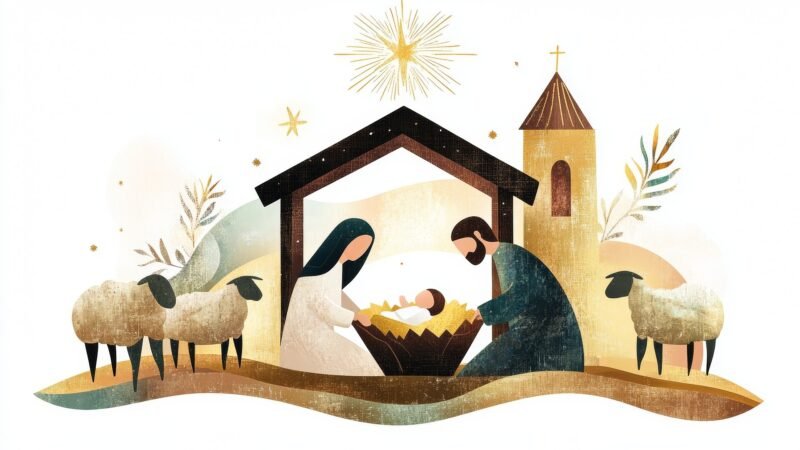

Before Bethlehem, the Alpha and Omega.
by Ruhama Assefa
One afternoon I rushed home, desperate to open my Bible. My heart was heavy, weighed down by sadness, and I longed for relief.
I searched the pages for a verse that would perfectly match my situation, something to comfort me in the moment. Tears streaming down my face, I poured out my problems at the feet of my Lord.
But as I flipped through Scripture, something unexpected happened. A conviction struck deep within me, almost like a weight pressing against my heart and mind. I believe it was the Holy Spirit. In that moment I felt ashamed because I suddenly saw what I had been doing — not just once but many times before. I wasn’t really studying the Word of God for what it said. I was hunting for verses that would echo my feelings.
Don’t get me wrong. There is nothing bad about running to God’s Word for comfort. Scripture is our shield and our refuge. But I realized I was listening only for what I wanted to hear, rather than allowing the Spirit to speak what I needed to hear. I wanted my situation addressed, but I was missing the bigger truth: The Bible is not a book of quick fixes; it is the revelation of a Person.
That Person is Jesus Christ.
Jesus is not just in the Gospels. He is there from the very beginning. He is the eternal Word, the Alpha and the Omega, the one who is, who was, and who is to come. When we read the Bible only for verses to soothe us, we risk missing the greater reality: It’s all about Him.
Eternal Christ
Many people, even Christians, don’t always grasp this. Some see Jesus as merely a prophet or a historical figure who suddenly appeared in the New Testament. In His own day, many of the Jewish people — faithful students of the law, experts in Scripture — failed to recognize Him. They could not see that the Messiah standing before them was the same One promised through their beloved Scriptures.
And honestly, without the Spirit’s help, we would miss Him too. Knowledge of the Bible alone is not enough. There is a difference between knowing the facts of Scripture and truly believing them. Belief always leads to the acceptance of Christ himself.
This is why the truth of Jesus’ preexistence matters so much. It shows us His deity, His eternality, His authority, and His humility. It roots our faith not in passing feelings but in the eternal plan of God. The prophet Micah once declared:
But you, Bethlehem Ephrathah, though you are little among the thousands of Judah, yet out of you shall come forth to Me the One to be Ruler in Israel, whose goings forth are from of old, from everlasting (Micah 5:2).
Jesus did not begin in Bethlehem. He stepped into history there, but He existed before time began. John’s Gospel tells us “All things were made through Him, and without Him nothing was made that was made” (1:3). Paul adds, “He is before all things, and in Him all things consist” (Colossians 1:17).
Eternal plan
When Jesus said, “Most assuredly, I say to you, before Abraham was, I AM” (John 8:58), He was not just claiming wisdom or seniority. He was identifying Himself with the God who revealed Himself to Moses as I AM (Exodus 3:14). His words carried the weight of eternity. And yet, Philippians 2 reminds us that, though He was in very nature God, He humbled Himself to become man, even to the death of the cross.
In His prayer before the cross, Jesus said, “And now, O Father, glorify Me together with Yourself, with the glory which I had with You before the world was” (John 17:5). The cross was not an accident, not a tragic twist of fate. It was the unfolding of God’s eternal plan, carried out by the One who shared glory with the Father before creation itself.
Continuous story
This is what struck me afresh in that moment of conviction: Life is not found in the Book itself but through the Book — in the Person the Book describes. From Genesis to Revelation, the Bible is one continuous story pointing to Jesus.
In Genesis, He is the promised Seed of the woman who would crush the serpent’s head. In Exodus, He is the Passover Lamb whose blood brings protection and deliverance. In the wilderness He is the manna from heaven, sustaining His people with life. The psalmists sing of Him as the Shepherd who guides and as the King who reigns. Isaiah speaks of Him as the Suffering Servant, pierced for our transgressions and crushed for our iniquities. Daniel sees Him as the Son of Man, coming with the clouds of heaven to receive everlasting dominion. Micah points to Bethlehem, declaring that the Ruler to come would be from ancient times.
And then, at last, the Gospels reveal Him in flesh and blood: Immanuel, God with us. The Old Testament whispers His name; the New Testament shouts it. The whole story is about Him.
Changed approach
Realization of this changes the way we read the Bible. When I see Jesus as the eternal Christ, I no longer come to Scripture just for a soothing verse, though God still comforts me through it. Instead, I come to meet Him, the one who was in the beginning and who will be at the end. His preexistence helps me trust, because His promises are not temporary but everlasting. It gives me hope because the One who existed before time holds my future securely. It humbles me because the eternal Word chose the path of humility for my salvation. And it moves me to worship because the Bible becomes not just a mirror of my feelings but a window into His glory.
When I look back at that day when the Holy Spirit stopped me in my tracks, I realize it was grace. The Jewish leaders of Jesus’ time read and memorized the Old Testament, yet many still missed seeing His messiahship. I can’t judge them, because I do the same when I approach Scripture for my own ends. Without the Spirit opening our eyes, none of us would see. That is why we need to pray — for ourselves, for our loved ones, for the world — that spiritual eyes would be opened.
We long for others to know the love we have felt, the rest we have received, and the peace that Christ has given us. But this comes only when we see Scripture not as a book of rules or comfort verses, but as the revelation of Jesus himself.
Finding Jesus
So now when I open my Bible, I remind myself that it’s not just about finding something for my situation. It’s about finding Him. Life is not in the pages but in the Person. From the first promise to the final vision, the Bible tells one story of Jesus Christ, the eternal Word who was with God in the beginning and who will reign forever.
When we open the Bible this way, it becomes about beholding His glory. And we are changed. As Revelation reminds us, “I am the Alpha and the Omega, the Beginning and the End,” says the Lord, “who is and who was and who is to come, the Almighty” (Revelation 1:8).