Bethlehem and beyond. by Dorothy Nimchuk
Many prophets and righteous men desired to see what you see, and did not see it, and to hear what you hear, and did not hear it” (Matthew 13:17).
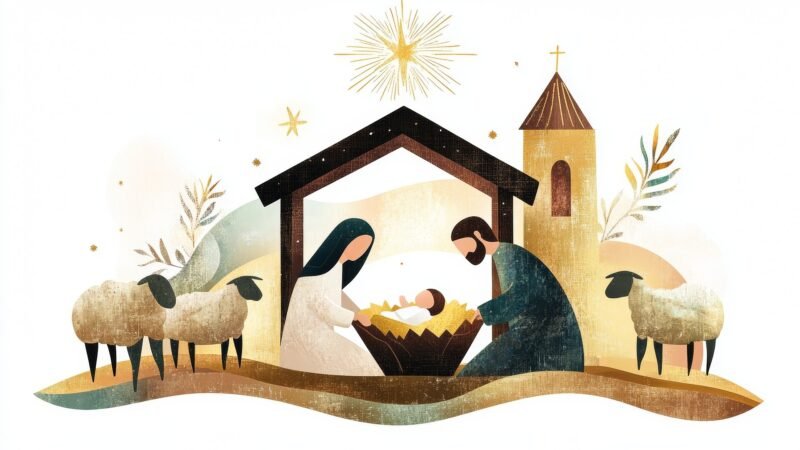
The road to Bethlehem had been long, but Joseph had been so caring. Any discomforts along the way and the pain of her contractions had been forgotten as she gazed into the face of the sleeping infant. To think she, Mary, had been privileged to have a part in bringing the Messiah into the world! No room at the inn, but the gentle lowing of animals in the stable had been rather comforting. But for Caesar Augustus’ census, they would still have been safely back in Nazareth(Luke 2:1-7; Micah 5:2).
The shepherds had come and gone, rejoicing to see the Babe, while anxious to get back to their sheep and to share the great news (Luke 2:8-20). Mary treasured their visit, storing the memories.
Her thoughts may have turned to her formerly barren cousin, Elizabeth, who had given birth six months earlier. Hearing of Elizabeth’s pregnancy (Luke 1:5-17; cf. Malachi 4:5, 6), Mary had made the ninety-mile trip by foot-caravan to rejoice with her at Ein Karem, a village seven miles south of Jerusalem. Little did she realize how the lives of their two babes would converge in later years.
With Mary’s pregnancy known, Joseph had thought to put her away privately. But once the angel Gabriel intervened, “he took his wife, but knew her not until she had given birth to a son” (Matthew 1:24, 25, ESV). Because Joseph took responsibility for raising Jesus, the Child would have been ascribed as a legal member of the tribe of Judah, an integral part of his own genealogy.
* * * *
Jesus: born fully human (Luke 2:11; Galatians 4:4), yet given fully divine — the preexistent, eternal Son of God (Isaiah 9:6; John 3:16; 1:14)! Jesus was circumcised the eighth day, according to the law of Moses, and presented at the temple following Mary’s purification.
There Simeon took the child in his arms and blessed God. “Lord, now You are letting Your servant depart in peace, . . . For my eyes have seen Your salvation . . . a light . . . to the Gentiles, and the glory of Your people Israel” (Luke 2:29, 30, 32; cf. v. 26; Isaiah 40:1, 2).
Anna, a widowed, 84-year-old prophetess, also thanked the Lord and witnessed to those who had awaited redemption from their rulers’ oppression.
* * * *
Wise men of the east had long studied the heavens, in all likelihood having heard of Balaam’s prophecy from Israelite captives in Babylon: “I see Him, but not now; I behold Him, but not near; a Star shall come out of Jacob; a Scepter shall rise out of Israel, and batter the brow of Moab, and destroy all the sons of tumult” (Numbers 24:17; cf. chapters 22-24; Nehemiah 13:1, 2).
When the star appeared, the wise men had journeyed to show honor to the future King of the Jews. Ezra’s trek from Babylon back to Jerusalem had taken four months (7:8, 9). The wise men’s journey may have taken at least as long.
When the wise men arrived in Jerusalem, King Herod directed them to Bethlehem: “Go and search carefully for the young Child, and when you have found Him, bring back word to me, that I may come and worship Him also” (Matthew 2:8; cf. vv. 1-11). Once there, they worshipped the Child and presented meaningful gifts: gold, worthy of a king; frankincense, fit for a priest; and myrrh for a prophet. The gifts would fund the couple’s subsequent flight into Egypt. They had been warned of Herod’s plans to kill the threat to his throne (vv. 12-18; Jeremiah 31:15). The wise men, also warned by God, returned home another way.
* * * *
After King Herod died in ad 1, Joseph was called back from Egypt (Hosea 11:1) and settled his family in Nazareth, a despised area of Judah thought to be of ill repute, backward, and uneducated (Matthew 2:19-23; cf. John 1:46; see sidebar).
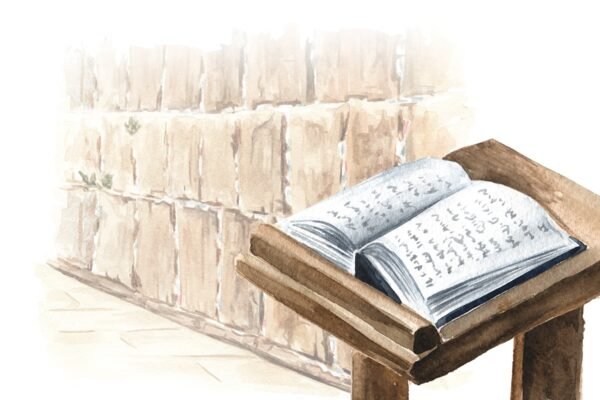
Life became a normal routine, with Joseph in his carpenter’s shop and Mary caring for Jesus and their growing family. Jesus and His younger siblings would have all attended Bet Sefer (“House of the Book”) at the village synagogue school. Most likely, Jesus, and possibly James, would have moved up to Bet Talmud classes (“House of Learning”). He no doubt would have been head of His class at Bet Midrash (“House of Study”; see sidebar),where only invited students studied.
One day Jesus stayed behind after the Passover feast, in deep discussion with temple leaders. There His parents found and admonished Him after a worried three-day search. They failed to understand that He was now aware of His true parentage (Luke 2:41-52).
Meanwhile, Mary stored all these things in her heart, along with other memories.
* * * *
Over the years, Jesus’ cousin John had grown strong in spirit, dwelling in the desert. Knowing his son was destined to be “the prophet of the highest,” Zechariah may have dedicated him to be raised by the Essenes (Luke 1:80; see sidebar).
At age thirty, John appeared “in the spirit and power of Elijah,” preaching repentance and baptism not far from their location. He identified himself as “The voice of one crying in the wilderness: ‘Prepare the way of the Lord; make His paths straight’” (Mark 1:2-8; cf. Isaiah 40:3). He declared there was One coming who would baptize not only with water but also with the Holy Spirit (John 1:6, 8).
Jesus came to John to be baptized and so fulfill all righteousness. The act confirmed Jesus as the Messiah and John as His forerunner, thus authenticating both John’s ministry and Jesus’ messiahship. As Jesus emerged from the water, a voice from heaven declared, “This is My beloved Son, in whom I am well pleased” (Matthew 3:17; cf. Isaiah 11:1, 2).
* * * *
Realizing that his own ministry was complete, John acknowledged that Jesus’ had just begun (John 3:25-30). Both their lives would be cut short, yet no greater impact has ever been made on the world than the life Jesus lived and the message He brought. In every respect, Jesus lived like a Jew, His future teaching methods true to the customs and traditions He had been born into. He most likely would have completed all three levels of education and “graduated” as a rabbi, a title that He would to be known by.
Jesus “came to His own, and His own did not receive Him. But as many as received Him, to them He gave the right to become children of God” (John 1:11, 12).
In Jesus’ Day
Archeological Findings
- The past one hundred years revealed that Galileans
- were the most religious Jews;
- were more educated in the Torah;
- had more famous rabbis than anywhere in the world in Jesus’ time;
- knew multiple languages from their dealings with travelers and merchants on the international trade route known as “the way of the sea.”
A first century synagogue in Nazareth, with its original foundation of black basalt stones, was likely the one where Jesus preached. A newer white structure was built circa ad 400-500 over the original foundation.
Synagogue Schools
- Every village had its own school with a rabbi or teacher to instruct the population. Every Jewish boy and girl attended the first level of education.
- Bet Sefer (“House of the Book”), ages 5-9: reading, writing, and memorizing the Torah. At age 10, most boys quit to learn the family trade, and girls remained home to help their mothers.
- Bet Talmud (“House of Learning”), ages 10-14: The more promising boys studied, memorized portions of the Old Testament, held rigorous debates and discussions, asked and answered questions, answered a question with another question (showing knowledge and regard for Scripture). At age 12, they quoted the Book of Leviticus verbatim, and the brightest students were pushed to memorize even more scriptures.
Bet Midrash (“House of Study”). Few students ever attained this level:
- Become a disciple of a rabbi (teacher);
- Copy the rabbi in every respect, including behavior;
- Accept rabbi’s beliefs and interpretations of Scripture;
- Take his “yoke”; the rabbi would say, “Come follow me”;
- The disciple (talmid) would eventually become a rabbi or teacher and get his own disciples (talmidim). Then the process would repeat.
John the Baptist
“And you, child, will be called the prophet of the Highest; for you will go before the face of the Lord to prepare His ways” (Luke 1:76).
Both the works of Josephus and the Dead Sea Scrolls reveal a community of Essenes on the northwest shore of the sea during the last centuries BC and the first century AD. It was part of a larger group of ancient Judaism living celibate, holy, and ascetic lives. Striking similarities can be found in the scrolls between the teachings and lifestyle of these Qumranites and those of John the Baptist. The Essenes were known for raising abandoned children or those dedicated at a young age by parents from priestly families.
In his book Jesus and the Dead Sea Scrolls: Revealing the Jewish Roots of Christianity, John Bergsma devotes an entire chapter to John and the Essenes and the plausibility of John being raised there. Isaiah prophesied that salvation would be for all nations. The word for nations in both Hebrew and Greek is Gentiles.
But the Essenes did not believe in salvation for the Gentiles, and this may have been the issue over which John would have left or been expelled from their community. Though the evidence is merely circumstantial, Bergsma and others believe John was raised there and left to expand his ministry of salvation through repentance and baptism.
— Dorothy Nimchuk